Going Through Half a Roll of Toilet Paper After Every Trip to the Bathroom Isn't "Normal." You Might Be Hosting a Freeloader in Your Gut.
A healthy gut leaves almost nothing to clean up. If yours leaves a sticky mess every morning, the cause is rarely the food on your plate, and you might not be the only one eating it.
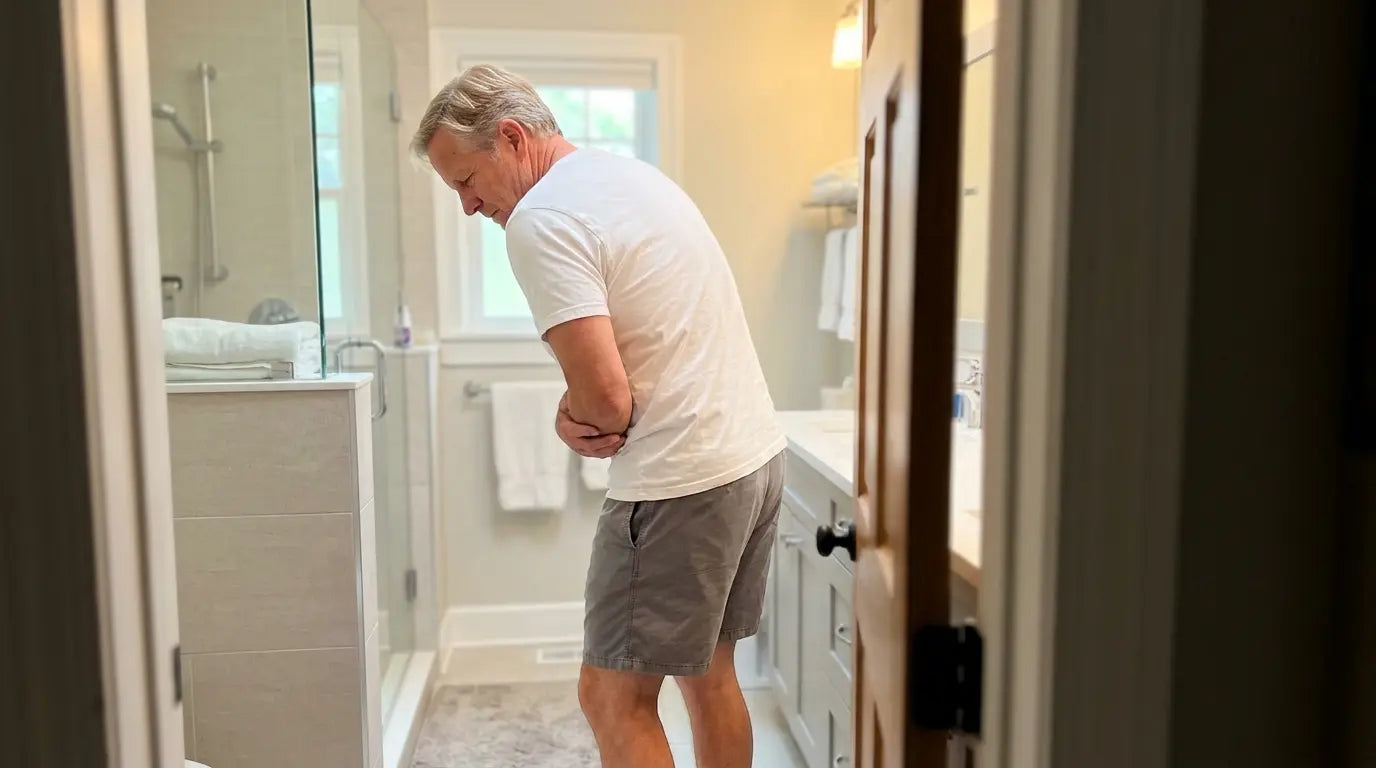
My wife took this photo without asking. I asked her to delete it. Instead, I ended up publishing it... because if you're reading this, you probably know exactly what this feels like.
You've probably never said this out loud to anyone. But cleanup takes longer than it should. A lot longer.
Two wipes. Three. Sometimes it feels like half a roll before you're actually clean. You've started to notice it. Maybe you've started to dread it.
So you did the sensible thing. You added fiber. You bought the probiotics with the highest number on the label. You cut out gluten for a month, then dairy, then whatever the internet told you to blame that week. You drank more water. You chewed slower.
Some of it helped a little. None of it fixed the actual problem. The stool still comes out soft, sticky, and hard to clean. You still feel heavy after lunch. And you're still standing in the bathroom longer than any person should have to.
I'm not writing this as an outsider. I cover gut health for a living, and I still spent years quietly dreading my own mornings. That's what finally pushed me to look into why none of the usual advice was working.
Here's the question no one at the pharmacy counter ever asks you: if this were really about what you're eating, why hasn't changing what you eat solved it?
The trouble might not be what you're putting in. It might be what's already living in there, and what it's doing to the way your stool forms.
What a "Clean Exit" Is Supposed to Feel Like
Ever wonder what people used before toilet paper? For most of human history, the answer was close to nothing. They didn't need much.
A gut that's in balance tends to make a firm, clean stool. One wipe and you're done. Some people call it a "ghost wipe." Clean exit, nothing left behind. If that sounds like a fantasy to you, that's kind of the point. It could be a sign your gut is out of balance.
Think of your gut like a garden. When the good plants fill the soil, there's no room for weeds. When the good ones thin out, weeds move in fast.
Some of those weeds, the bad bacteria that don't belong there, can push your body to make extra mucus. That slippery layer can keep your stool from forming the way it should. So instead of a clean, solid exit, you get a soft, fermented mess that takes half a roll to clean up. You're not really digesting your food at that point. You're just passing it.
Here's the part that's easy to miss: this was probably never about what you eat. A gut that's out of balance keeps making the mess on its own, and no diet gets to that.
Why Fiber, Probiotics, and Cutting Foods Keep Missing It
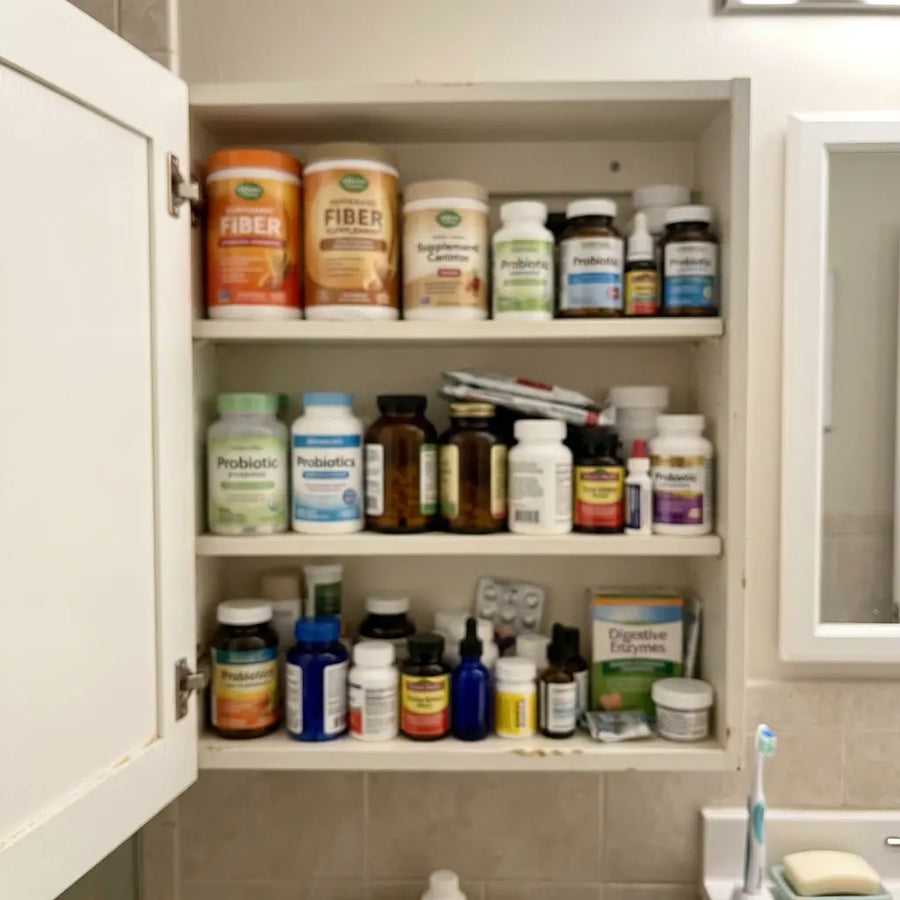
Everything in that bathroom cabinet does something. It just may not do the one thing you actually need.
Add bulk so things move along. But bulk isn't the issue when the stool won't form in the first place. They can help you go, and still leave the mess and the mucus behind.
Add a few strains of good bacteria. That's a fine idea. But a handful of strains can get lost in a gut that's already out of balance, which is why a lot of people don't feel much.
Drop gluten, dairy, or FODMAPs and you might feel a bit better for a while. But if the balance in your gut is still off, the trouble tends to come back once the food does.
One pushes things out. The other slows things down. Either way, they work on the output. They don't touch why the stool isn't forming right to begin with.
Flush the pipes for a day or two. A flush doesn't rebuild the balance, so most people are right back where they started by the weekend.
Every one of those manages the mess. None of them deal with the freeloader making it. If you want the mess to stop, your gut has to get its balance back.
What Actually Helps the Gut Find Its Balance
When I dug into gut balance, the same two natural compounds kept coming up. And the interesting part was how they work: not by going after a freeloader directly, but by making your gut a place it can't hold on to.
The first is carvacrol, the active part of oil of oregano. Part of why a freeloader can dig in is that it hides behind a thin film it builds around itself, where your body has a hard time reaching it.
In lab research, carvacrol has been studied for supporting the breakdown of that film and for making it harder for disruptive organisms to take hold. It doesn't "attack" anything. It just helps tip your gut back toward balance, so the good bugs crowd out the bad bacteria producing all that mucus.
The second is thymoquinone, the active part of black seed oil. It's been looked at for supporting your body's own natural cleansing processes and a healthy inflammatory response in the gut. When your gut is calmer and doing its own housekeeping, an unwanted guest has a much harder time settling in.
Put simply: one helps loosen the freeloader's grip. The other helps your body keep it from settling back in.
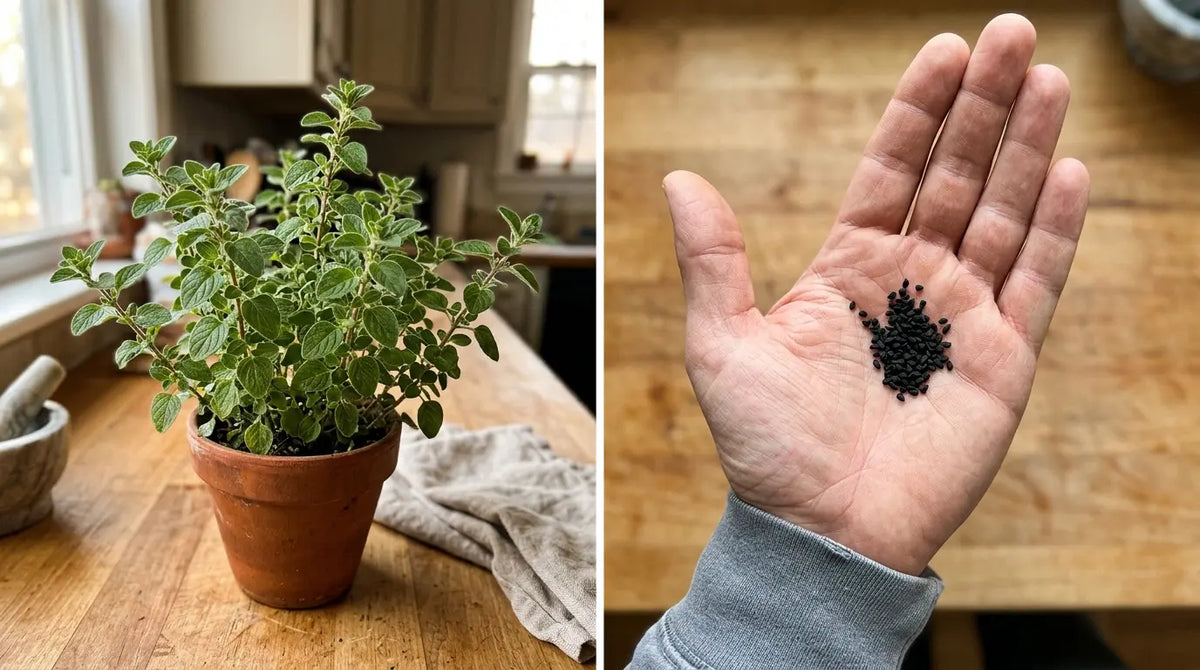
The two botanicals behind it: oregano and black seed.
Two Old Herbs, One Daily Softgel
Neither of these is new. Oil of oregano has been used around the Mediterranean for over two thousand years. Not the kind you sprinkle on pizza. A concentrated oil pressed from the leaves.
Black seed oil is the one with the modern human research behind it. Its active compound, thymoquinone, has been studied in 82 randomized controlled trials in over 5,000 people. The seeds richest in it tend to come from the Ethiopian highlands, where black seed has been grown for centuries.
Two ingredients. Two jobs. Oil of oregano, with two thousand years of traditional use. Ethiopian black seed oil, with the modern human research.
Why Most Oil of Oregano on the Shelf Does Nothing
Once the idea clicked, I figured I'd just grab a bottle. Easy. It wasn't.
This is where I lost a couple of months and about a hundred bucks. Most oil of oregano on the shelf is watered down. The carvacrol is so low it's basically flavoring. And almost none of them paired it with black seed oil at a real strength.
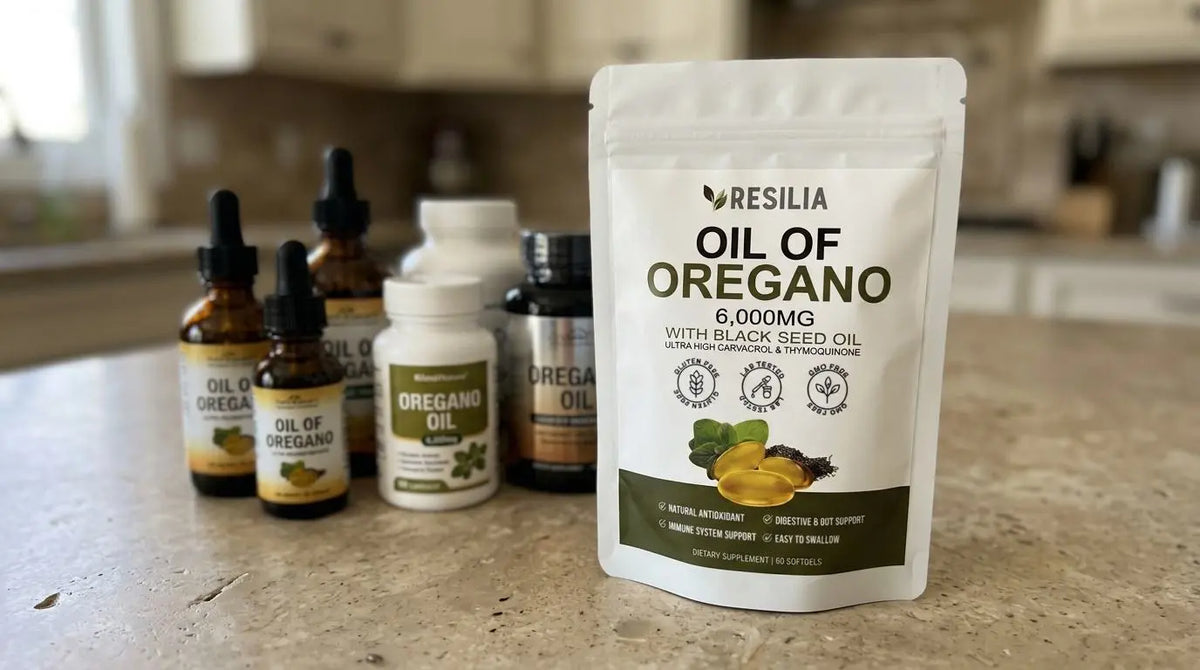
I went through four or five before I found one that actually matched what the research used. Same compounds, real strength, nothing hidden.
That one was Resilia, Oil of Oregano with Ethiopian Black Seed Oil.
| What Matters | Why It Matters |
|---|---|
| High-carvacrol oil of oregano | Carvacrol is the part that supports a healthy gut microbial balance. Most drugstore versions are too weak to matter. |
| Ethiopian black seed oil at strength | The Ethiopian highland seed tends to be richer in thymoquinone than cheap sources. It supports a healthy inflammatory response in the gut. |
| No proprietary blend | Every dose is printed right on the pouch. Nothing hidden behind a vague label. |
| Third-party tested | Checked by an outside lab, batch by batch, so what's on the label is what's inside. |
| Two softgels a day | No powder, no prep, no weird taste. You take it with breakfast and get on with your day. |
Why I Was Finally Willing to Try
I'd been burned a few times already. The next one was going to have to earn my trust differently than the last one.
What got me was the refund terms. 30 days. One email. No forms, no proof of use, no hassle. If you're not happy for any reason, you get your money back.
That wasn't a clever offer. It was the first time one of these companies put their own money behind the product instead of asking me to put mine behind theirs. You either notice a difference or you pay nothing. That's the whole deal.
Here's What Finally Felt Different
I'm giving you the real timeline, not a polished before-and-after. I take two softgels every morning with breakfast. That's the whole routine.
Days 1-6:Nothing I could point to with any confidence.
Day 8:The bloating I'd had every evening, that soft, uncomfortable fullness that had me feeling puffed up by 7pm, was noticeably gone. I wrote it off as coincidence.
Day 10:I realized cleanup had quietly gotten easier. The stool was actually forming, one or two wipes instead of the whole production. That was the first moment I thought something was genuinely different.
Week 3:I woke up one morning without the heavy, sluggish reluctance to get out of bed I'd started treating as normal. After feeling that way for a long time, it wasn't a small thing.
Week 4:The mid-afternoon slump that used to flatten me after lunch had eased off. I hadn't changed anything else. Same food, same routine. The only new variable was two softgels every morning.
Weeks 5-8:It held. Slowly and steadily, my mornings stopped revolving around the bathroom, in a way they hadn't in years. My pants fit a little easier too.
Individual results vary. This is my own experience over eight weeks, so give it time before you judge it.
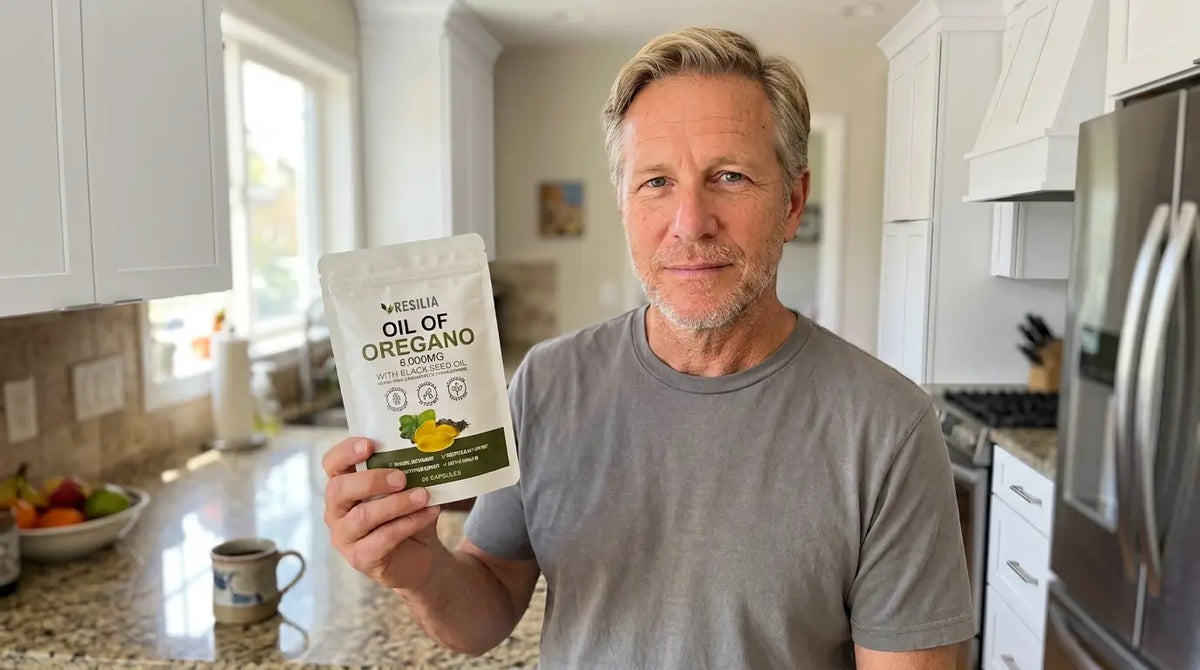
What Other People Notice
I'm not the only one who found it this way. A few of the notes I've gotten back from other people who tried it:
"For the first time in years, I'm not planning my whole morning around the bathroom. Cleanup is just normal now, one or two wipes and done. I honestly didn't think that was possible for me."
Verified buyer
"The bloating after dinner was the part that bugged me most. A few weeks in, that heavy, stuffed feeling had eased up a lot. I feel lighter than I have in a long time."
Verified buyer
"I stopped dreading the bathroom, and the afternoon slump I always blamed on lunch isn't really there anymore. Wish I'd found it sooner."
Verified buyer
Individual results may vary.
Two Things Worth Knowing Before You Try It
It's not a detox, and there's no dramatic "flush." If you're expecting a cleanse-style reaction, this isn't that. It's a slow shift as your gut finds its balance, which is the whole idea.
Give it a few weeks. This isn't a pill you take once for a quick fix. It's a daily habit. The people who stick with it are the ones who end up talking about it.
Two ways this goes from here:
Option one: another year of half a roll, planning your day around the bathroom, feeling heavy after lunch, and hoping it sorts itself out.
Option two: try the simple morning habit built around two well-studied compounds, and see if your gut finds its balance the way mine did.
Patterns like this don't usually fix themselves. But the gut can be supported. I'm proof of that.

About Resilia
Quick recap: high-carvacrol oregano oil paired with Ethiopian black seed oil, third-party tested, in a simple two-softgel morning routine.
The launch deal: 50% off a single pouch right now, or buy-two-get-one-free if you want to run the full routine. Free shipping on multi-pouch orders.
Every order is backed by a 30-day money-back guarantee. They make it in small batches, so the last deal sold out fast.
If the link below is still active, stock is still available.